
In the dynamic world of cryptocurrency and traditional financial markets, automated trading strategies have gained significant traction. Among these, grid trading stands out for its methodical approach to profiting from price fluctuations within a defined range. A grid trading bot systematically places buy and sell orders at predetermined intervals, aiming to capture small profits from each price movement. While the concept is straightforward, optimizing a grid strategy for maximum profitability and minimal risk requires careful planning. This is where a Grid Trading Bot Profit Calculator becomes an indispensable tool, allowing traders to simulate potential outcomes and fine-tune their parameters before deploying real capital.
Understanding the Mechanics of Grid Trading
Before diving into the calculator, it’s crucial to grasp the core components of a grid trading strategy:
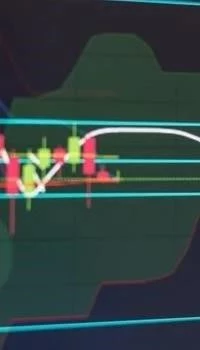
- Price Range: This defines the upper and lower boundaries within which the bot operates. The expectation is that the asset’s price will oscillate within this range.
- Number of Grids/Grid Spacing: Grids are horizontal lines within the price range. The “number of grids” dictates how many buy and sell levels are established. Alternatively, “grid spacing” defines the percentage or absolute price difference between consecutive grid lines. A smaller spacing means more grids and potentially more frequent trades, but also requires more capital.
- Investment Amount: The total capital allocated to the grid strategy, typically split between the base currency (e.g., BTC) and the quote currency (e.g., USDT).
- Profit per Grid: The target profit percentage or absolute amount desired from each successful buy-and-sell cycle within a grid.
- Long Grids (Buy Grids): Orders placed to buy the asset as its price falls to a grid line.
- Short Grids (Sell Grids): Orders placed to sell the asset as its price rises to a grid line, typically after a corresponding buy order has been filled.
The bot continuously monitors the price. When the price drops to a buy grid, it executes a buy order. If the price then rises to the next sell grid, it executes a sell order, securing a small profit. This process repeats as long as the price stays within the defined range.
Why a Profit Calculator is Essential for Grid Traders
Deploying a grid bot without prior calculation is akin to navigating uncharted waters without a map. A profit calculator offers several critical advantages:
- Risk Assessment: It helps evaluate the potential drawdown if the price breaks out of the range or moves against your initial position.
- Strategy Optimization: Traders can experiment with different parameters (range, number of grids, investment) to identify the most robust and profitable configurations for various market conditions.
- Expected Returns Projection: Provides an estimate of potential profits over a given period, helping set realistic expectations.
- Capital Efficiency: Determines how much capital is required to run a specific grid strategy and whether it’s utilized effectively.
- Fee Impact Analysis: Grid trading involves numerous small trades, making transaction fees a significant factor. A calculator can quantify their impact on overall profitability.
- Breakeven Analysis: Identifies the point at which the strategy starts to become profitable after accounting for fees and initial capital allocation.
Key Metrics a Grid Trading Bot Profit Calculator Should Include
An effective calculator will require specific inputs and provide comprehensive outputs. Here’s a breakdown:
Input Parameters:
- Asset Pair: E.g., BTC/USDT.
- Current Price: The current market price of the asset.
- Upper Price Limit (Ceiling): The highest price point for your grid.
- Lower Price Limit (Floor): The lowest price point for your grid.
- Number of Grids: Or, alternatively, the Grid Spacing Percentage (e.g., 1%) or Absolute Grid Spacing (e.g., $10).
- Total Investment Amount: The total capital you are willing to allocate to the bot, in your quote currency (e.g., USDT).
- Average Transaction Fee: The percentage fee charged per trade by your exchange (e.g., 0;1%). This is crucial as grid bots make many trades.
- Profit per Grid (Target): The desired profit percentage on each successful buy-sell cycle within a single grid (e.g., 0.5% of the capital used for that grid).
Output Metrics:
- Individual Grid Price Levels: A list of all buy and sell prices.
- Amount Per Grid: The capital allocated to each individual grid level.
- Total Capital Required: The exact amount of base and quote currency needed to fill all grids, assuming the price moves from one end of the range to the other.
- Potential Profit Per Grid Cycle (Gross): The profit generated from one successful buy and subsequent sell within a single grid.
- Net Profit Per Grid Cycle (After Fees): The actual profit after deducting transaction fees for both the buy and sell order.
- Total Potential Profit (Full Range Movement): The maximum profit if the price traverses the entire grid range, triggering all possible buy-sell cycles. This often assumes multiple cycles.
- Estimated Number of Trades (Full Cycle): How many buy and sell orders would be executed if the price moves from the bottom to the top (or vice versa) of the range.
- Breakeven Grid Price: The price point at which the profit generated covers all fees and costs associated with the setup.
- Estimated Daily/Weekly/Monthly Profit: If you input an assumed number of grid cycles per period, the calculator can estimate periodic profits.
- Annualized Return (APR): Projecting potential returns over a year, useful for comparing against other investments.
- Drawdown/Exposure at Limits: Shows how much capital is tied up in the base currency if the price hits the lower limit, or in the quote currency if it hits the upper limit.
- Capital Utilization Rate: How efficiently your capital is being used within the active grids.
How to Effectively Use a Grid Trading Bot Profit Calculator
- Define Your Market Conditions: Based on technical analysis, identify a likely price range for your chosen asset. Consider its volatility and trend.
- Input Initial Parameters: Enter your desired range, capital, and a starting number of grids or grid spacing.
- Analyze the Outputs: Review the potential profit, capital requirements, and fee impact.
- Iterate and Optimize:
- If the profit is too low, try increasing the number of grids (decreasing spacing) or increasing your capital (if feasible).
- If the capital required is too high, decrease the number of grids or narrow the price range.
- Adjust your desired profit per grid.
- Consider Real-World Factors: Remember that calculators provide theoretical maximums. Factors like slippage, sudden market crashes (where stop losses are crucial), and prolonged periods outside your range can affect actual results. Always factor in potential stop-loss levels and the implications of the price breaking out of your defined range.
- Backtesting: While a calculator simulates, backtesting tools allow you to apply your parameters to historical data to see how the strategy would have performed.
Limitations and Important Considerations
While invaluable, profit calculators have limitations:
- Static Market Assumption: They assume the price stays within the defined range and fluctuates sufficiently to trigger trades. Real markets are dynamic.
- No Volatility Prediction: Calculators don’t predict how often the price will cross grid lines. A flat market within your range yields no profit.
- Opportunity Cost: Capital tied up in a grid might perform better in a trending market with a different strategy.
- Risk of Range Breakout: If the price moves decisively above or below your range, the bot will stop trading, and you’ll be left with either 100% base currency (at a loss if below the range) or 100% quote currency (missing out if above the range). Implementing stop-loss and take-profit for the entire grid is crucial.
- Exchange Fees and Liquidity: While fees are accounted for, high-frequency trading can sometimes face liquidity issues on smaller exchanges, leading to wider spreads or unfilled orders.
A Grid Trading Bot Profit Calculator is a powerful analytical tool that empowers traders to approach automated grid strategies with confidence and precision. By enabling comprehensive scenario analysis, risk assessment, and profit projection, it transforms guesswork into calculated decisions. While it cannot predict future market movements, it provides the essential framework for designing, optimizing, and understanding the financial implications of your grid trading endeavors. Integrating this calculator into your trading workflow is a fundamental step towards building more robust, profitable, and risk-aware automated trading strategies.

This article provides such a clear and concise explanation of grid trading, making a complex topic accessible. I particularly appreciate the emphasis on the Grid Trading Bot Profit Calculator; it truly highlights how crucial simulation and optimization are before deploying real capital. An excellent read for anyone looking to understand or refine their automated trading strategies!